


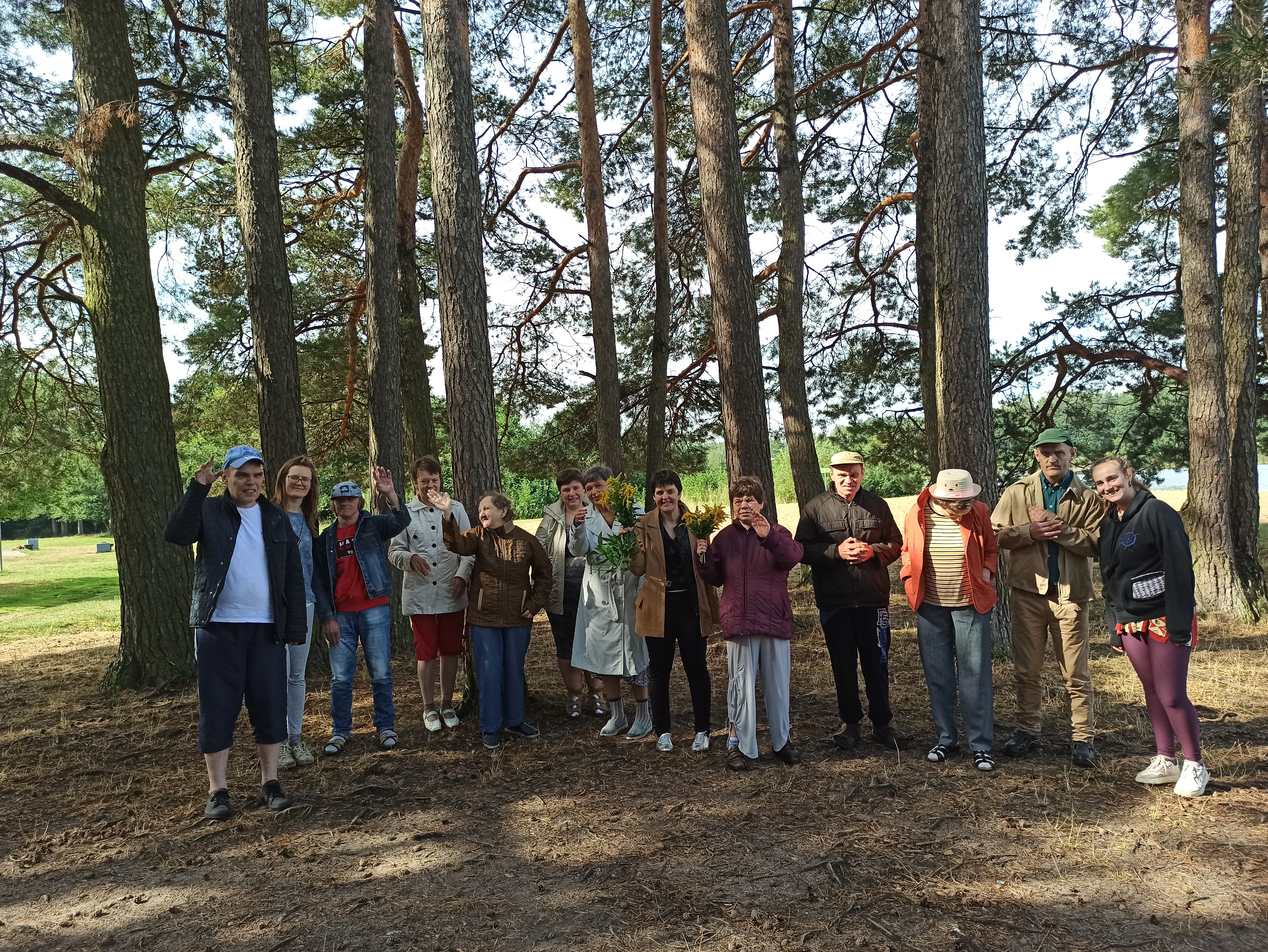
Valakampiai Social Services Home is located in Valakampiai, surrounded by beautiful nature. As soon as they wake up, our residents can see the trees, hear and watch birds flying nearby, and sometimes even spot a roe deer or a hare running past. Everyone enjoys being able to pick wild strawberries or blueberries in the nearby forest just outside our grounds.
There is a practice known as forest therapy, pioneered by the Japanese, which was developed to help people who work long and intensive hours restore their strength and ability to work. According to the Forest Therapy Institute website (https://foresttherapyinstitute.com/what-is-forest-bathing-and-forest-therapy/), “Shinrin-Yoku”, or “forest bathing”, is a practice that originated in Japan in 1982 as part of a national health programme designed to reduce stress levels among the population. Forest therapy is the practical application of nature-based interventions, such as “forest bathing”, aimed at addressing specific mental and physical health challenges. Forest therapy is based on the sensory experience of connection, while “forest bathing” is the simple and natural act of immersing oneself in the atmosphere of the forest. It is intended to strengthen social connections and increase social capital, which can help overcome isolation. By strengthening our connection with the natural world, we rediscover a sense of beauty, wonder, awe and curiosity, while calming our brain and nervous system. Stress levels decrease and the immune system becomes stronger.
We do not have forest therapists, but we experience and appreciate the benefits provided by the forest.
During the COVID-19 quarantine, when residents were unable to leave the organisation’s grounds and had to maintain physical distancing, spending time in the yard and walking in the nearby forest were among their greatest sources of enjoyment.
I decided to talk to the organisation’s employees and residents about spending time in forests and parks, by rivers and going for walks. It was interesting to find out how residents and employees feel when spending time in nature and what benefits it provides them.
I asked residents and employees: “Do you enjoy being in nature? How do you feel in the forest or by a river? What emotions and feelings arise? How often do you spend time in the forest? What interests you and what do you enjoy doing most when you are in nature?”
Resident Kristina: “I like going to the forest. I especially like mushrooms, berries and wildflowers. I am in a good mood when I go to the forest. In the forest, I think about the forest. The forest is big and very beautiful; I wish it all the best.”
Resident Danguolė: “I don’t go to the forest; I go to parks. I like parks. I especially liked Belmontas Park. A very beautiful river flows there... trees... The Vilnelė River flows there, and there are waterfalls. I liked it very, very much. We went to the Owl Park. It was also very beautiful there. We saw birds and an owl. The park is very nice; you can really go for a walk there. Vingis Park is also very nice. We saw lots of trees and flowers. We went to the zoo in Kaunas and saw many animals. Parks are nice...”
Resident Jefrosinija: “I like going to the forest; I like flowers. I am in a good mood when I go to the forest. There are beautiful flowers in the forest. Daisies... I go to the forest with the employees. It is nice to go for a walk.”
Activity specialists Viktorija Kuodytė and Ieva Gerliakaitė: “We walk in nature every day. It is a time eagerly awaited by both residents and employees. Calmly and slowly, we can walk around the neighbourhood, relax and free ourselves from everyday worries. At other times, nature is a source of unexpected discoveries. A tree has a calming effect on residents – sometimes hugging a tree trunk for just a few minutes has a positive and soothing effect. The forest is full of delightful surprises and interesting things. Together with residents, we observe how many mushrooms have grown overnight, how the berries have ripened, and we learn about different plants. Sometimes we see animals. Each resident has a different relationship with the forest environment: some go to pick a fresh bouquet of flowers, some enjoy picking berries, while others are most impressed by mushrooms. The atmosphere of the forest and a peaceful walk also provide an opportunity for meaningful conversations between residents and employees. We talk about the day, emotions, life and dreams.”
Senior General Practice Nurse Edita Bazarauskienė: “Nature is the only book in which every page is meaningful” – J. W. Goethe.
When searching for inspiration and meaning, wanting to hear answers, when comfort and support are needed, when strength is lacking, when pain clouds the mind and everything seems hopeless, when all you see is a grey world and you do not know what to do next, you take the Book of Nature into your hands. You turn its first page and realise that you are part of this book. A wonderful, powerful, captivating, sometimes mysterious book, full of different colours and deep emotions. And already overcome by curiosity, you cannot wait to turn to the second page. It is a page of discoveries and joyful experiences, when you begin to notice colourful butterflies dancing in the sunlight, a calm surface of water or, after getting lost in your thoughts, when you suddenly stop after seeing the impressive beauty of colourful butterflies or hearing a divinely beautiful melody created by our friends – the birds. Then comes the desire to fly... To fly into a fairy tale where you can immerse yourself in the embrace of a magical lake, breathe in the unique fragrance of flowers and feel the warm embrace of the branches of a mighty oak or another tree, filled with love and warmth. Peaceful and safe, warm and bright... A perfect fairy tale from which you return rested, having regained your strength, found answers, received support and understanding, eased your pain and discovered hope. Hope to live, create, change, discover, have and never give up...
Life is wonderful, and the Book of Nature is infinitely powerful... And what is on the next page of the book? That is a secret... A secret of nature that we still have to uncover.
The residents of the organisation live surrounded by nature, where the breath of the forest can be felt every day. Residents participate in relaxation and wellness activities and enjoy walks by the river, where they can always leave their grievances and sadness behind and rediscover joy and happiness. They return home smiling, sometimes a little tired, but always happy.
Nature increases feelings of happiness, reduces aggression, hyperactivity and attention disorders, lowers blood pressure and strengthens the immune system. One resident manages her anxiety very well by going for walks in the forest. Friendly conversations with forest inhabitants (squirrels, roe deer, hares, birds and insects) improve residents’ psycho-emotional well-being. As a medical professional, I recommend that residents spend more time in nature to improve their well-being and gain valuable experiences that can help change their perception of their surroundings. I believe that the positive effects of nature on health are undeniable, and we discover more and more of its benefits every day.”
General Practice Nurse Kristina Galvanauskienė: “I grew up in the wonderful town of Biržai and spent my summers with my grandmother on the shores of Lake Širvėna. I have been a child of nature since I was very young. I believe that nature and people are one. Spending time in nature helps me calm down, listen to myself and find answers to troubling questions. If I feel anxious or have restless thoughts, a few hours of walking are enough for me to return feeling like a different person. I have read that the Japanese practise forest therapy to manage various disorders. It helps me a great deal, and I listen to the sounds of nature and simply enjoy it. There is so much beauty around us; we just need to stop and notice it. When I work at weekends, we go to the river with the residents. Walking and communicating together gives us a lot – we release accumulated emotions, observe the changing nature, take Nordic walking poles, talk about the animals that live in the forest, and look for berries and mushrooms. Once, one resident was feeling anxious, but after a long walk returned feeling completely different, because that time we walked all the way to the first beach. I think it is a great advantage that these homes are surrounded by nature.”
Social work assistant Renata Kozlovskė: “One resident always notices the scent of the forest and constantly asks, ‘Can you smell it?’ She likes to take a deep breath when she enters the forest, and then an employee encourages other residents to breathe in and out as well. Many of them do so. Residents are observant. While walking along the same path, they notice that a tree or flower has blossomed in the forest meadow and immediately say, ‘Look, look, can you see it?’ We stop and discuss it. At the same time, many questions arise, such as why leaves fall. We discuss the seasons and how they change. Some residents enjoy being by the pond. We discuss the sounds of nature and their significance: which ones are real (how to protect ourselves from them), why rain is necessary, the dangers of thunder and lightning, and fears. How do we feel when there is a storm in nature? Is nature, like a person, affected by moods and emotions? Many residents observe their surroundings in nature and share their thoughts, or simply remain with their own thoughts. During winter, we watch birds arriving, admire the snow caps on the branches and eagerly await nature’s awakening.”
I would like to thank the residents and employees for their sincere and warm contributions. Hearing about their experiences of spending time in nature once again confirmed what generous gifts nature gives us and how important it is for us to protect and appreciate it. I wish this for everyone around me.
Deputy Director for Social Affairs
Virginija Paulauskytė
Last updated: