


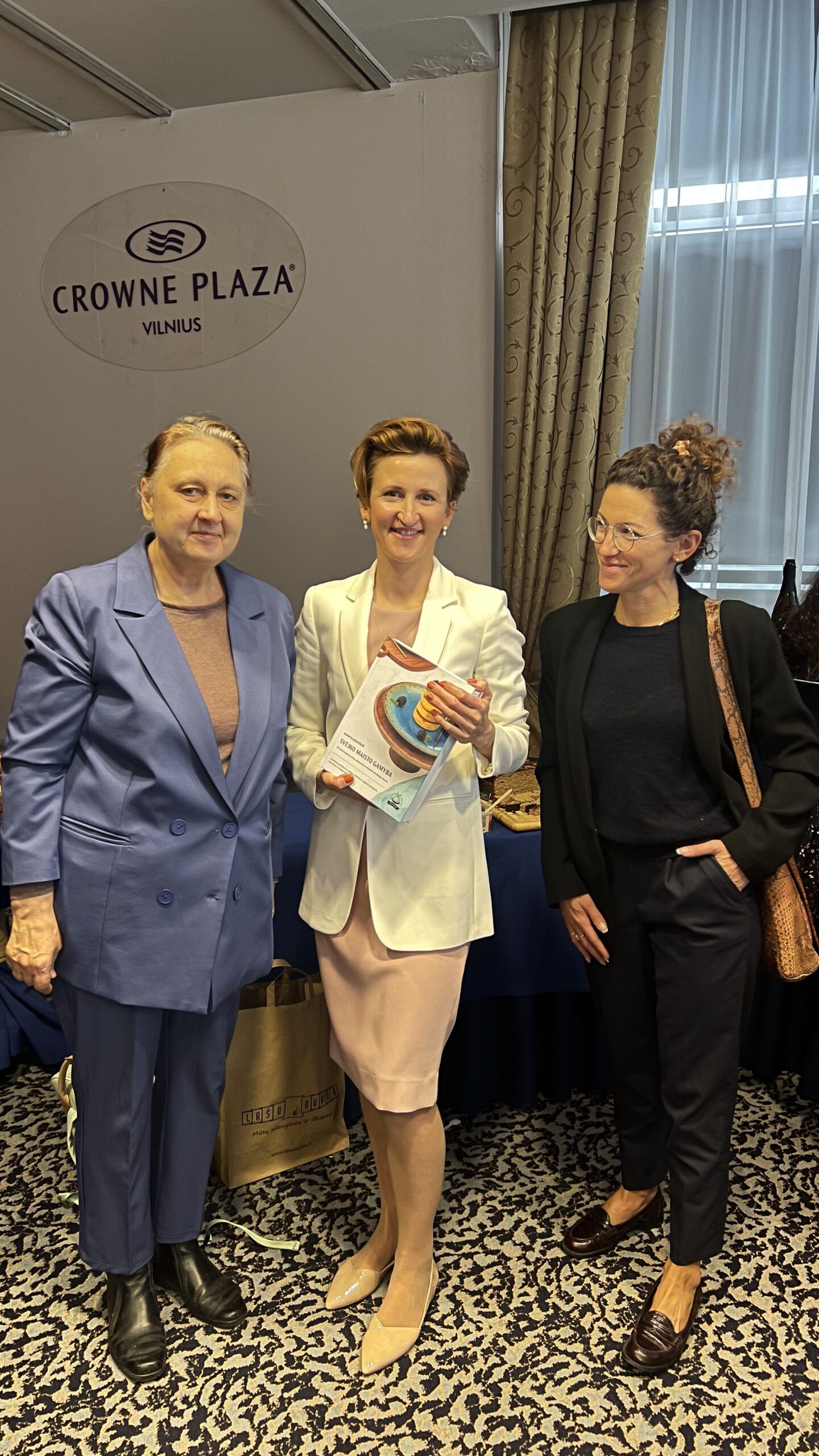
On 29 September 2022, employees of the Valakampiai Social Services Home, dietitian Dalia Lenkutienė and cook Viktorija Tilindienė, participated in the annual “Quality Food Festival 2022”, organised by Raminta Bogušienė, founder of the public institution “Sveikatai palankus” (“Health-Friendly”) and a specialist in health-conscious food technology. The festival, which has been organised for five consecutive years, aims to raise public awareness about choosing food products bearing recognised quality labels and to promote their consumption in Lithuania. These include products with EU-protected designations of origin (PDO), protected geographical indications (PGI), and traditional specialities guaranteed (TSG), as well as organic products and products produced in accordance with Lithuania’s national agricultural and food quality system. During the festival, our employees took part in tastings of various organically certified and quality-labelled food products, with the aim of selecting and introducing new, healthier products into the diets of the residents of our institution.
The employees also participated in a conference for healthcare professionals, dietitians, physicians, and representatives of the catering sector. As part of their professional development, they attended a number of presentations, including a presentation by Paulius Astrauskas, Vice-Minister of Agriculture of the Republic of Lithuania, on current issues in food quality, and a presentation by Prof. Dr Rimantas Stukas, Head of the Department of Public Health at the Institute of Health Sciences, Faculty of Medicine, Vilnius University, on trends in conscious food choices, as well as other presentations.
This week, our dietitian Dalia invited the residents to taste a health-friendly fermented oat drink. The probiotic fermented oat drink is a deep-fermentation product made using modern technologies and contains a concentrate of beneficial fermentation microorganisms and enzymes designed to support the gut microbiome. Beneficial bacteria (probiotics) living in the human body can have a significant impact on the immune system, contribute to important cellular processes, and influence our mood and overall well-being. Microorganisms contribute to the production of beneficial fatty acids, B vitamins, vitamin K, folic acid, essential amino acids, neurotransmitters such as serotonin and dopamine, digestive enzymes, and various postbiotic metabolites, including calcium, magnesium, zinc, selenium, and chromium. They also help the body absorb biologically active substances. Probiotics may also support the production of anti-inflammatory proteins and the activity of T cells, contribute to maintaining healthy cholesterol levels, and help regulate blood pressure. The residents of our institution greatly enjoyed trying this new-flavoured drink.
During the conference, our staff members had the opportunity to learn about and purchase food technologist Raminta Bogušienė’s professional resource – the book *Healthy Food Preparation*, which includes 322 carefully developed recipe specification sheets, menus, practical methodological materials, and useful recommendations.
Džiaugiamės kartu, jog mūsų įstaiga siekia tobulėjimo ir dar aukštesnių gyventojų maitinimosi kokybės standartų, bei rezultatų.
Last updated: