


In implementing EQUASS and seeking to improve the quality of our services, in 2020 we compared our activities with those of 2 Lithuanian and 2 foreign institutions.
One of the Lithuanian institutions with which we compared our activities – BĮ Vilnius City Children and Youth Boarding House – is a long-term partner of our institution. The other institution is the “Pašilaičiai” Care Home.
The two foreign organisations with which we compared our activities are based in Spain and Portugal.
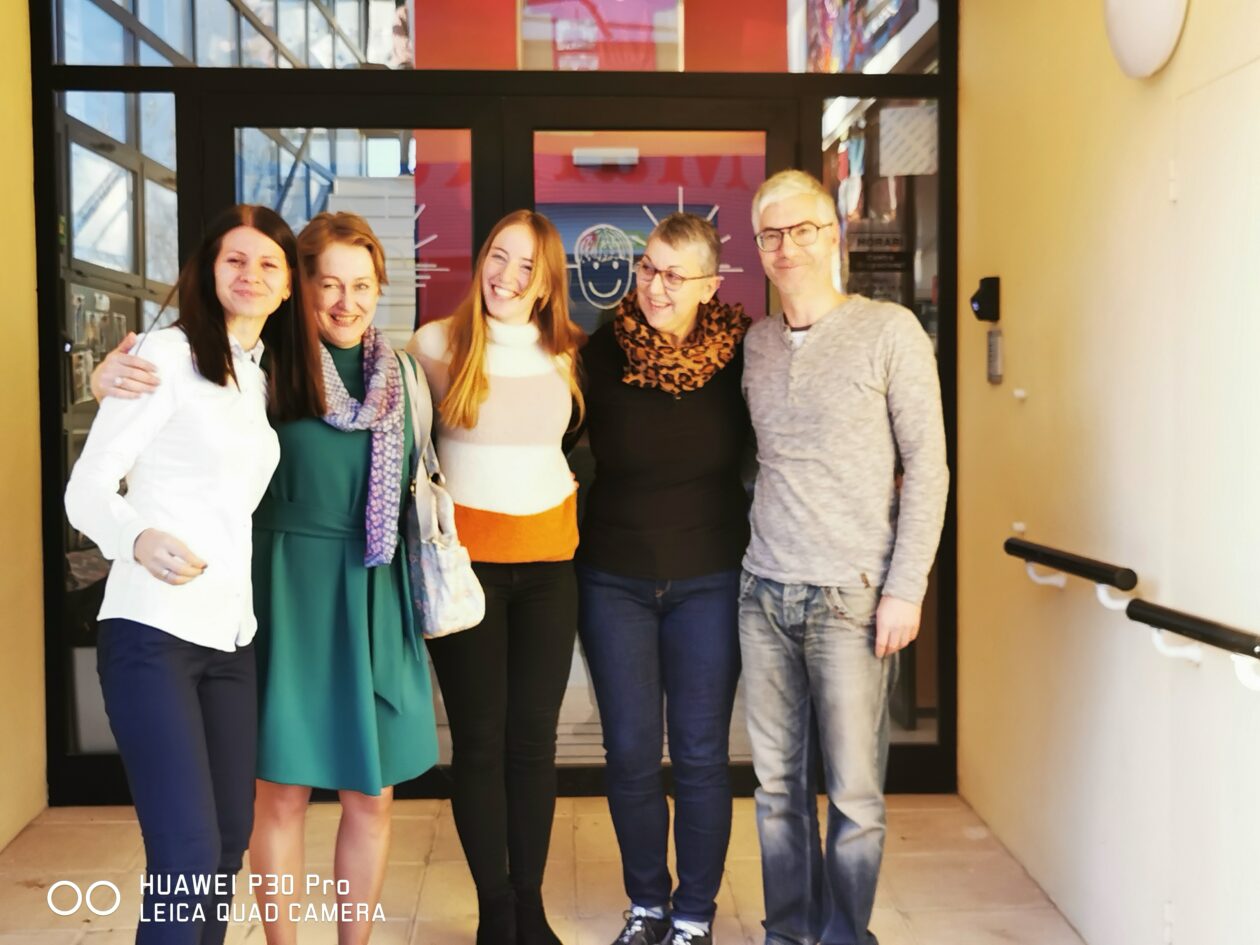
In November 2019, two of our employees visited one of the institutions in Faro, Portugal – “APPC Faro” (Centro de Atividades Ocupacionais Associação Portuguesa de Paralisia Cerebral de Faro, https://www.appc-faro.org.pt/), which provides social services to people with intellectual and complex disabilities and which, in its efforts to improve the quality of its services and assess its activities, holds an EQUASS Excellence certificate. This institution is renowned in its field for its working experience, challenges, and innovations. https://www.appc-faro.org.pt/pt/), kurioje teikiamos socialinės paslaugos proto ir kompleksinę negalią turintiems asmenims ir kurios pasiekimai siekiant kokybiškų paslaugų įvertinti EQUASS Excellence sertifikatu. Ši įstaiga geranoriškai sutiko pasidalyti gerąja savo darbo patirtimi, iššūkiais ir inovacijomis.
In February 2020, two social workers travelled to “APASA” (Associacio de Families de Persones amb Discapacitat Intellectual I del Desenvolupament de la comarca del Montsia, https://apasa.org/), located in the Spanish region of Catalonia. This institution introduced our employees to its activities, priority areas, and achievements. https://apasa.org/), esančią Ispanijos Katalonijos regione. Ši įstaiga supažindino mūsų darbuotojas su savo veiklomis, prioritetinėmis sritimis, pasiekimais.
Communication and the sharing of experience with both Lithuanian and foreign institutions providing social services to people with intellectual, mental, and complex disabilities enabled us to learn about the specific features, advantages, and achievements of these institutions, as well as valuable practices that are actually implemented and suitable for us, helping us to achieve greater satisfaction among the recipients of our services.
What new and interesting things did we learn and implement at our institution? BĮ Vilnius City Children and Youth Boarding House introduced us to questionnaires used to monitor the quality of life of people with severe disabilities who are unable to speak. We learned that the “Pašilaičiai” Care Home pays considerable attention to promoting residents’ physical well-being: residents spend time by the sea and have a three-wheeled bicycle. Therefore, we also began taking measures related to improving our residents’ physical well-being. In 2020, we submitted an application to the Sports Support Fund project selection competition for the purchase of specialised outdoor sports equipment (exercise machines), and we are currently completing the implementation of the project. Our residents will be able to improve their health by exercising on the equipment.
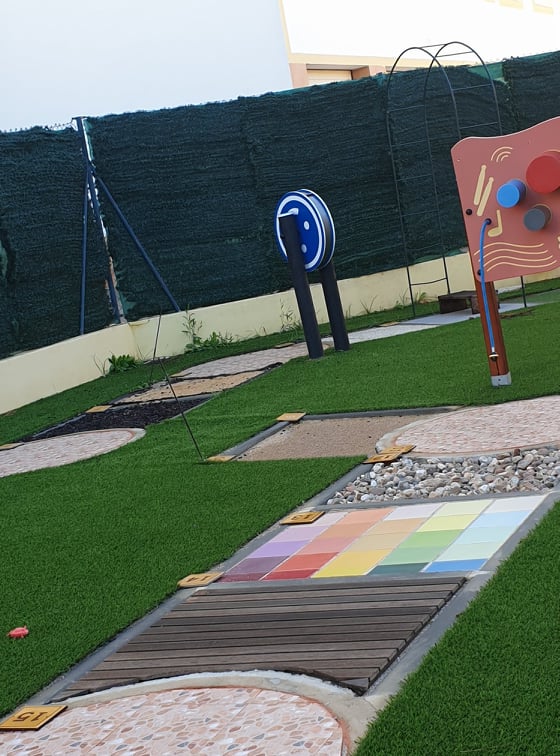
We applied the working practices of the Spanish institution “APASA”: in the group living homes, a stand has been installed with various objects attached to it, allowing residents to touch, observe and listen to their sounds, thereby helping to develop fine motor skills. In February 2020, we introduced a new practice – involving residents in completing monthly menus – and we began doing so. A multisensory feature – neon lighting – was installed in the residents’ dining room.
We learned a great deal of useful information from our Portuguese colleagues working at “APPC Faro”: their approach to involving relatives in service provision, measures for improving communication with relatives, and simple and practical information systems. On 29 November 2019, during a meeting of the institution’s Advisory Council, aimed at creating more opportunities for residents to express their views by involving their relatives, we asked residents’ relatives to provide suggestions in satisfaction and human rights questionnaires on how they could personally contribute to improving services and ensuring human rights. On 10 February 2020, at a meeting of residents’ relatives, we invited them to participate in organising residents’ leisure activities at weekends, communication, encouraging relatives to visit, correspondence, and ensuring confidentiality. We also introduced a residents’ information system based on the Portuguese model (information about residents and the services provided to them is gathered in one place, residents’ photographs are included so that new employees can become familiar with them more quickly, etc.).
In following and implementing the EQUASS principles, it is important not to stop but to continuously improve the quality of services. Becoming familiar with the activities and perspectives of other institutions that differ from our own can make a significant contribution to improving the institution’s activities and increasing the satisfaction of all stakeholders.
We would like to thank our colleagues for their willingness to share their experience and encourage everyone to strive to make social services accessible and of high quality!
Deputy Director for Social Affairs
Virginija Paulauskytė
Last updated: